Braces In Surrey For Adults: Can I Straighten My Teeth Without Making Treatment Too Noticeable?

Adults often arrive at an orthodontic consultation with two concerns that seem to compete with each other. They want to improve their teeth, sometimes after thinking about it for years, but they also do not want orthodontic treatment to become the first thing colleagues, clients, friends, or other people notice about them. For someone who spends the day in meetings, works directly with the public, or simply feels established in their appearance, the idea of wearing braces can seem much more significant at 35 or 45 than it did at 15.

Fortunately, choosing braces as an adult does not automatically mean choosing a highly noticeable treatment. Modern orthodontics offers different ways to make fixed appliances less visually prominent, and there are situations where braces may still be the treatment an adult prefers even when removable clear aligners are available. The more useful question is therefore not simply whether adults can get discreet braces, but how an orthodontist can balance appearance, treatment needs, lifestyle, and predictability when recommending the right option.

Braces In Surrey For Adults Can Be More Discreet Than You Expect

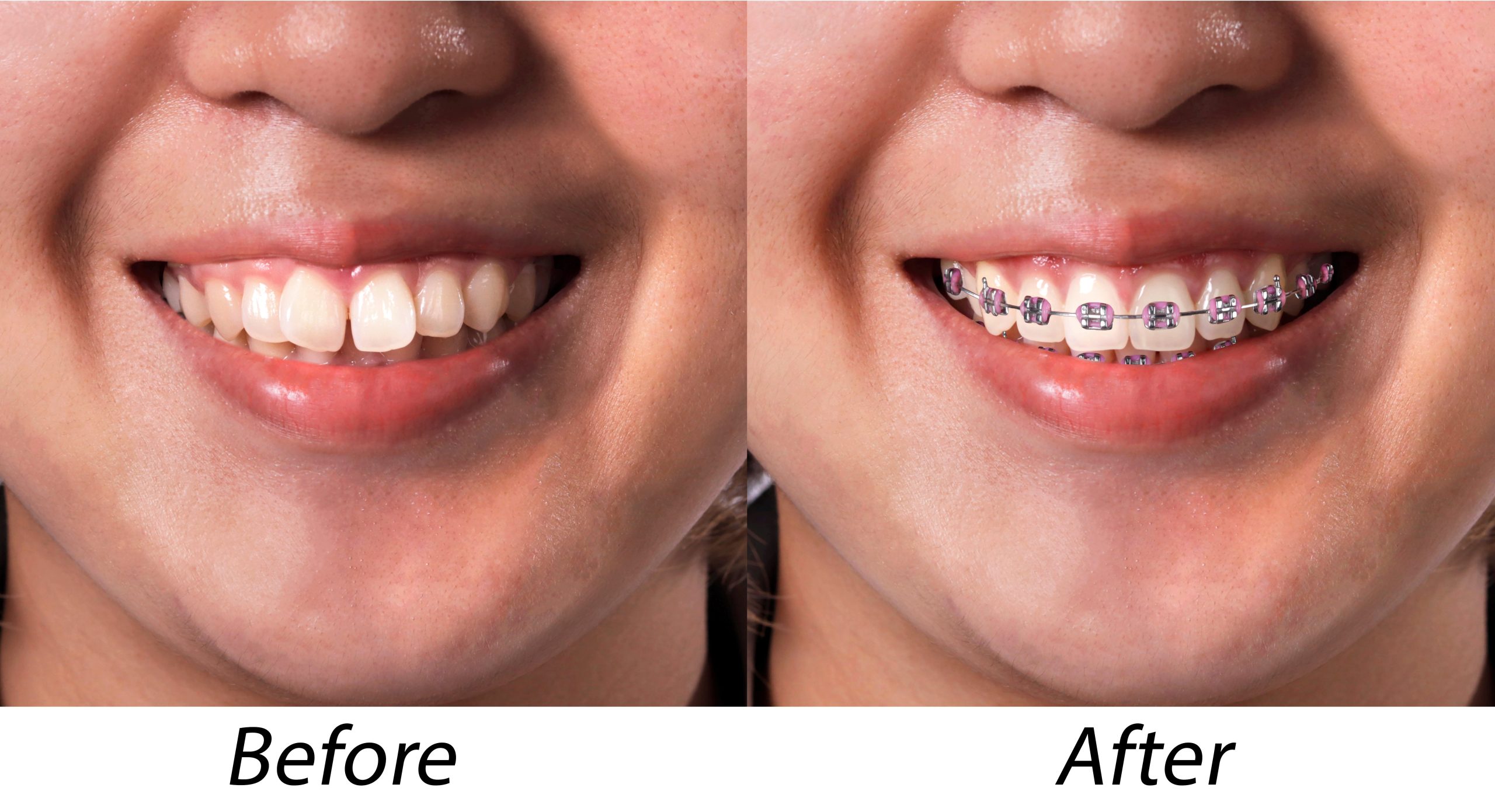
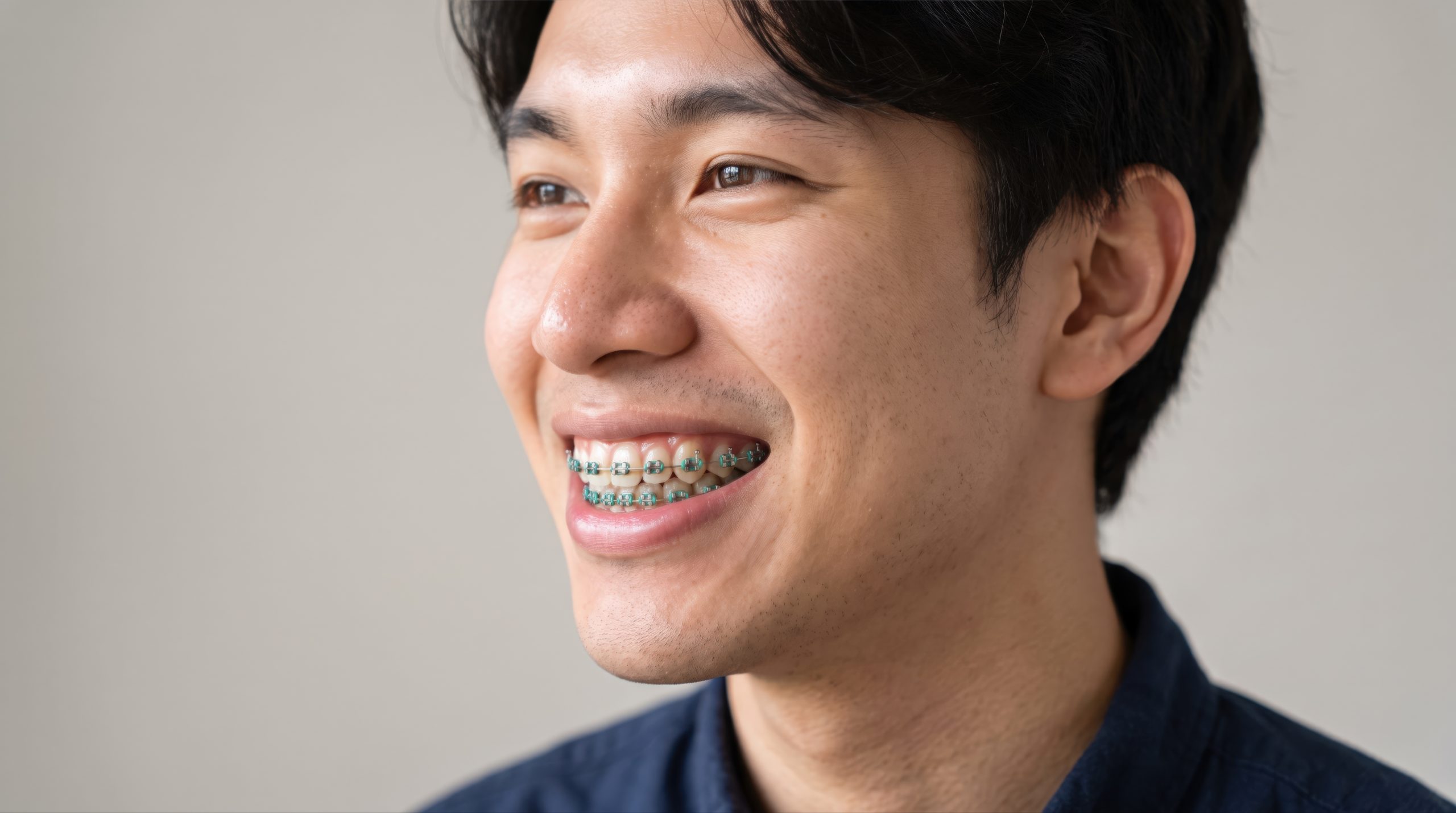
The image many adults have of braces is often based on the orthodontic treatment they remember from school. Traditional metal braces still exist and remain an effective option, but they are not the only way fixed orthodontic treatment can look. Depending on the patient’s needs and the options recommended by the orthodontist, lower profile brackets and less visually prominent materials can make braces considerably more subtle than patients expect before their consultation.

Ceramic braces are one example. Because the brackets are designed to blend more closely with the natural colour of the teeth, they can reduce the visual contrast associated with metal appliances. They are not invisible, and presenting them that way would create unrealistic expectations, but from normal conversational distance they may feel considerably less prominent. For an adult who wants the reliability of fixed treatment without drawing as much attention to it, that difference can matter.

There is also a social reality that is difficult to appreciate before treatment begins. Adults tend to notice their own braces far more than other people do. A patient preparing for an important presentation may spend the morning thinking about whether the brackets are visible, while everyone in the room is focused on the presentation itself. We often find that the anticipation of wearing braces is more disruptive than actually living with them. Once treatment becomes part of the patient’s normal appearance, the amount of mental space it occupies usually decreases considerably.

Discreet Does Not Automatically Mean Invisalign

It is understandable that adults concerned about appearance often begin by asking about Invisalign. Clear aligners can be an excellent treatment option, but appearance is only one part of the decision. The orthodontist also needs to determine what movements are required, how complex the bite correction will be, and which approach makes sense for the individual patient.

There is another practical difference that adults sometimes overlook. Invisalign is discreet partly because the aligners are removable, but that removability also places more responsibility on the patient. Someone who regularly attends long business lunches, drinks coffee throughout the workday, travels frequently, or knows they are likely to forget to put aligners back in may actually find fixed braces simpler. Once braces are placed, they continue working without the patient having to track daily wear time.

Consider an adult whose job involves frequent client dinners. Invisalign might initially sound like the obvious choice because the aligners are barely noticeable, but every extended meal requires removing them and remembering to reinsert them afterward. Another patient may spend most of the workday at a desk and have a predictable meal schedule, making aligner management remarkably easy. Neither option is universally more convenient. The patient’s actual routine often tells us much more than the word “discreet” does.

What To Consider Before Choosing A Less Noticeable Treatment

A useful orthodontic consultation should move beyond the question of which appliance is hardest to see. Adults generally have more established routines and different priorities than younger braces patients, so choosing treatment involves understanding how orthodontics will interact with the life they already have. Several considerations are particularly worth discussing with your orthodontist:

  • How visible do you realistically need treatment to be? Someone who appears regularly on camera may have different priorities from someone who mainly wants braces to look subtle during ordinary conversations. Being specific about the situations that concern you helps the orthodontist understand what “discreet” actually means to you.
  • What does your treatment need to accomplish? Straightening the front teeth may be only one part of the plan. If the bite, rotations, spacing, or other relationships also need correction, your orthodontist can explain which appliances offer appropriate control for those movements and what aesthetic options are compatible with them.
  • Would fixed treatment actually suit your personality better? Some adults love having control over removable aligners. Others would rather have an appliance that stays in place and does not require them to think about wear time throughout the day. Being realistic about your habits is more useful than choosing the option that sounds easiest on paper.
  • What does your workday look like? Coffee breaks, client meals, travel, shift work, presentations, and limited access to a bathroom can all affect the practical experience of orthodontic treatment. Bringing these details into the consultation allows the treatment discussion to reflect your real schedule rather than an idealized routine.
  • How important is treatment duration compared with appearance? Different orthodontic needs can require different approaches, and the least visible option is not necessarily the option a patient ultimately prefers once other priorities are considered. Asking about the tradeoffs gives you a much clearer basis for making the decision.
  • Do you have existing dental work? Adults are more likely than teenagers to have crowns, bridges, implants, significant restorations, or a history of gum treatment. These factors can influence planning and may matter more to the final recommendation than the cosmetic preference that originally brought you to the consultation.

Thinking through these questions before choosing an appliance prevents the decision from becoming a simple contest between “visible” and “invisible.” The best treatment is one you can comfortably live with while still giving the orthodontist the control needed to achieve the planned result.

Making Braces Feel Less Noticeable In Everyday Life

Once adults decide on braces, there are practical ways to make treatment feel less prominent without trying to hide it constantly. One of the simplest is keeping the teeth and appliances clean. Food caught around brackets attracts far more visual attention than the brackets themselves, and good oral hygiene also protects the teeth and gums throughout treatment. Carrying a small toothbrush or interdental brush can be particularly useful for people who eat lunch at work or frequently meet clients after meals.

It is also worth thinking about visibility realistically rather than examining braces from a few centimetres away in a bathroom mirror. That is not how other people normally see you. If appearance matters for your work, look at yourself from a typical conversational distance or test how the braces appear on the camera and lighting you actually use for video meetings. Patients sometimes discover that an aesthetic concern that seemed enormous in the mirror is barely noticeable in their normal professional environment.

Speech is another concern adults occasionally raise, particularly when their work involves presentations or frequent conversations. Fixed braces can initially feel unfamiliar against the lips and cheeks, but most patients adapt as they become accustomed to the appliances. If you have a major presentation shortly after placement, discussing the timing with your orthodontic team in advance can help you plan around the initial adjustment period rather than allowing treatment to collide unnecessarily with an important professional commitment.

When Adult Orthodontics Requires A Different Kind Of Planning

Aesthetic preferences matter, but adult orthodontic planning also needs to account for the history of the mouth. A teenager may begin treatment with healthy unrestored teeth and ongoing growth, while an adult might arrive with crowns, missing teeth, previous extractions, gum recession, or dental work completed over several decades. Straightening the teeth without considering that history would miss an important part of the case.

For example, an adult considering braces because the lower front teeth have become increasingly crowded may also have areas of gum recession. The question is not simply how to make those teeth look straighter. The orthodontist needs to evaluate the available bone and gum support and determine how the teeth can be moved appropriately. In another case, orthodontic treatment may be coordinated with future restorative work so that the teeth are positioned correctly before a crown, implant, or other procedure is completed.

This is also why an adult should not assume that a relatively small cosmetic concern necessarily means a simple treatment, or that a noticeable alignment problem automatically requires an extensive one. The complexity lies in what needs to happen beneath the visible smile. A thorough assessment allows aesthetic preferences to become part of the plan without allowing them to override the clinical factors that ultimately determine a healthy, stable result.

If concerns about appearance have been keeping you from exploring orthodontic treatment, a consultation can give you a much more concrete idea of what your options would actually look like. Bring the practical questions with you, including work commitments, social concerns, existing dental work, and what you would most like to change about your smile. Those details help turn a generic discussion about braces into a treatment plan built around your circumstances.

PacificWest Dental Group provides adult orthodontic care in Surrey with options tailored to different clinical needs and lifestyles. Contact our team to book an assessment and find out which approach can deliver the result you want while fitting comfortably into the life you already have. If you prefer talking on the phone, please feel free to reach us in Surrey at 604-501-0993.

Dr. Yashodhan Milind Bichu

  • Certified Specialist-Orthodontics, British Columbia College of Oral Health Professionals, 2024
  • Dental Speciality Assessment and Training Program Orthodontics, University of British Columbia, 2024
  • M.D.S, Master of Dental Surgery, Goa Dental College & Hospital, Goa University, Goa, India,2010
  • B.D.S, Bachelor of Dental Surgery, MGV’s KBH Dental College & Hospital, Nashik, Maharashtra University of Health Sciences, India 2006,

Dr. Yash is a Certified Specialist Orthodontist with an experience of over 14 years gained through specialist orthodontic practices in Mumbai, India and Dubai and Abu Dhabi, United Arab Emirates. He is multilingual and fluent in several languages, including Hindi, Punjabi, Marathi, and Arabic.

He completed his dental program from India in 2006 with Honors, as a distinguished recipient of the Vice-Chancellor’s Certificate of Merit for Academic Excellence and subsequently earned his master’s degree in Orthodontics from Government Dental College as a Gold Medalist of the Goa University in 2010. Being an ardent advocate of ‘Learner for Life’ philosophy, Dr. Yash went on to pursue advanced training in Lingual Orthodontics, Micro Implant Anchorage and Surgical Orthodontics at the Yonsei University, Seoul, South Korea in 2014. He then completed a mini-residency stint at the UConn Dental School, University of Connecticut, USA (2017) to further hone his skills for accelerated orthodontics and clear aligner therapy.

Dr. Yash moved to Canada with his family in 2022 and completed his orthodontic specialty recertification program at the University of British Columbia in 2024, by securing the single coveted seat offered to internationally trained Orthodontists in 2023. He is also a fellow of the prestigious Royal College of Dentists of Canada- an honor bestowed to the top dental specialists in their field.

Dr. Yash believes in “Practice Passion in Orthodontics” and specializes in treating children with preventive and interceptive orthodontics, and adults with contemporary and esthetic treatment modalities.

In his spare time, Dr. Yash enjoys talking; actually, mostly listening, to his wife, Aditi, an orthodontist herself; and their chatty 6-year-old daughter, Anahita. The trio live in Vancouver and love exploring all the wonderful places, sampling the plethora of cuisines and just soaking in the resplendent beauty that Beautiful British Columbia and Canada offer!

Find Our More About Surrey Orthodontics

To find out more about the orthodontic specialties, braces for teeth and treatments at PacificWest Dental Group, please call PacificWest Dental Surrey or Vancouver offices to book an appointment. 

Dr. Yan Liu

  • University of British Columbia 2021, Vancouver, Certified Orthodontics and Dentofacial Orthopedics
  • Arthur Dugoni School of Dentistry, 2004, San Francisco, Postdoctoral Fellowship
  • Pecking University, 2001, Beijing, PH.D.
  • Beijing Medical University 1997 Beijing, DDM,

Dr. Yan Liu is a Certified Specialist of Orthodontics and Dentofacial Orthopedics with over 20 years of experience as both a practitioner and an educator. She has been practicing at Pacificwest Dental Group in Vancouver BC, since 2021.

She received her Doctor of Dental Medicine from Beijing Medical University in 1997 and later acquired her Ph.D. from Peking University in 2001. In 2004 Dr. Liu finished her postdoctoral fellowship at the Arthur Dugoni School of Dentistry in San Francisco. She is now a part-time faculty at UBC Dentistry School, where she spends considerable time advancing research and mentoring students. Her clinical researches are about Assessment of Treatment Results of Invisalign and Comparison of Root Resorption Between Cases Treated with Invisalign and Fixed Edgewise Appliance.

When asked what gets her up in the morning, Dr. Liu says it’s seeing her patients thrive in life with their new smiles. She strives to explore efficient treatment modalities that serve patients well and keep her knowledge and skills updated. She also cares about the ongoing research and development in Orthodontics and how to improve the long-term impact on patients’ beautiful smiles. Her enthusiasm for her work is further evident in her active involvement in the Canadian Association of Orthodontics as well as the BC Society of Orthodontists.

In her spare time, Dr. Liu enjoys spending time with her family. She loves to golf, bike and practice yoga, too.

Professional Memberships

  • The Canadian Association of Orthodontists
  • The British Columbia Society of Orthodontists
  • The Chinese Association of Orthodontists
  • Invisalign Annual Summit Speaker

Find Our More About Surrey Orthodontics

To find out more about the orthodontic specialties, braces for teeth and treatments at PacificWest Dental Group, please call PacificWest Dental Surrey or Vancouver offices to book an appointment. 

Dr. Kevin Lee

Dr. Kevin Lee

  • University of British Columbia 2015 Combined MSc and Diploma in Orthodontics, Vancouver, BC
  • University of British Columbia 2011 DMD, Vancouver, BC
  • University of British Columbia 2006 Bachelor of Science: Biochemistry, Vancouver, BC

Born and raised in Taiwan, Dr. Kevin Lee moved to Richmond, BC with my family in 1999 when he was 15 years old. Dr. Lee received his Bachelor of Science (Biochemistry) Degree and Doctor of Dental Medicine degree from the University of British Columbia in 2011. After spending a year working as a full-time hospital dental resident at the Montefiore Medical Center in the exciting city of Bronx, New York (Yankees!), Dr. Lee came home to British Columbia, where he spent three years at UBC to complete graduate training in orthodontics. He also earned a Master of Science degree in Craniofacial Biology for his study of Dentofacial Morphology in Children with Obstructive Sleep Apnea.

Dr. Lee is a certified specialist in Orthodontics, a fellow of the Royal College of Dentists of Canada, and diplomat of the American Board of Orthodontics. Dr. Lee is also a director of the Taiwanese Chamber of Commerce in BC.

Dr. Lee lives in Richmond with his wife Dr. Sherry Liu, a local family dentist, and their two kids. In his spare time, Dr. Lee enjoys photography, cooking, movies, and spending time with families and friends. He also volunteers at Willingdon Church as photographer and First Aid Responder.

“The unique combination of art, mechanics, and science required to treat every patient is what made orthodontics fascinating to me. Because every smile and patient is unique and different, a customized treatment plan is formed for each person to provide a balance between function, aesthetic, and health. As a board-certified orthodontist, I am passionate in updating myself with the most advanced knowledge and skill to provide quicker, easier, and most predictable treatment options for my patients. I am excited for the opportunities to meet with every one of my patients to share my knowledge, skill, and passion in orthodontics, and to form a long lasting partnership with them.”

Find Our More About Surrey Orthodontics

To find out more about the orthodontic specialties, braces for teeth and treatments at PacificWest Dental Group, please call PacificWest Dental Surrey or Vancouver offices to book an appointment. 

Dr. Cheng Lun Wang

  • DDS. Doctor of Dental surgery, University of Western Onterio, 1989
  • MSc. University of Manitoba 1994
  • Cert. of Orthodontics, University of Manitoba 1994

Orthodontic specialist, Dr. Wang, is the founder and sole-proprietor of PacificWest Orthodontics and Dental Group in Surrey and Vancouver. Dr. Cheng Lun Wang graduated with a degree in Dental Surgery from the University of Western Ontario in 1989.

After graduation, he completed an internship with the Hospital for Sick Children in Toronto, transitioning later into a full-time position with the I.W.K. Hospital for Children in Halifax and specializing as a pediatric orthodontist. During this time, Dr. Wang continued to teach undergraduate dental students from Dalhousie University, while also building a part-time private practice in Dartmouth, Nova Scotia.

Dr. Wang entered the orthodontic program at the University of Manitoba in 1991. After three years of intensive Clinical Orthodontic training, he earned a Masters of Science degree in Craniofacial Biology in 1994.

An enthusiasm for continuing education has led Dr. Wang to share his years of professional experience on Orthodontic and Pediatric dentistry at various lectures and professional presentations throughout Canada. In addition to actively practicing lingual and labial Orthodontics in his private clinics, he also serves as a clinical instructor at the University of British Columbia (UBC) School of Dentistry. His clinical research has been published in the Journal of Oral Surgery, Oral Medicine, and Oral Pathology.

Dr. Wang’s primary focus is working directly with you to meet your specific orthodontic needs. Working with his orthodontic associates and support team, Dr. Wang practices out of two PacificWest Dental Group clinics – one in Vancouver BC and the other in Surrey BC. 

Professional Memberships

Find Our More About Surrey Orthodontics

To find out more about the orthodontic specialties, braces for teeth and treatments at PacificWest Dental Group, please call PacificWest Dental Surrey or Vancouver offices to book an appointment. 

Are You a New Patient?

Existing Patients – please use contact form