
After months or years of adjustments, elastics, food restrictions, and watching your teeth gradually change, hearing that your braces may be coming off soon is exciting. It can also raise a surprising number of questions. Patients often want to know whether removal hurts, what their teeth will feel like afterward, whether they can immediately eat normally again, and why we are still making tiny adjustments when their smile already looks straight.
The final stage of braces involves more than waiting for the day the brackets come off. Before we finish treatment, we want to be confident that the result works beyond the mirror. Then comes another important transition: learning what your teeth and bite feel like without braces and protecting the positions we worked to achieve. Knowing what happens during this period can make those last appointments much more interesting, because many of the small details suddenly have a clear purpose.
One of the most common experiences near the end of treatment is feeling ready before we are quite ready to remove the braces. A patient looks in the mirror and sees straight front teeth, yet we may still be adjusting an elastic, changing the position of a bracket, or asking for a little more time. This can seem puzzling until you understand what we are evaluating during those final visits.
Straight front teeth are only one part of a finished orthodontic result. We also look at how the upper and lower teeth meet, whether spaces are completely closed, whether individual teeth have reached the planned position, and whether the bite is functioning evenly. Sometimes a tooth that looks perfectly straight from the front still needs a small adjustment to its angle or position relative to the opposing teeth. Those details may not create a dramatic change in photographs, but they can make a meaningful difference to function and stability.
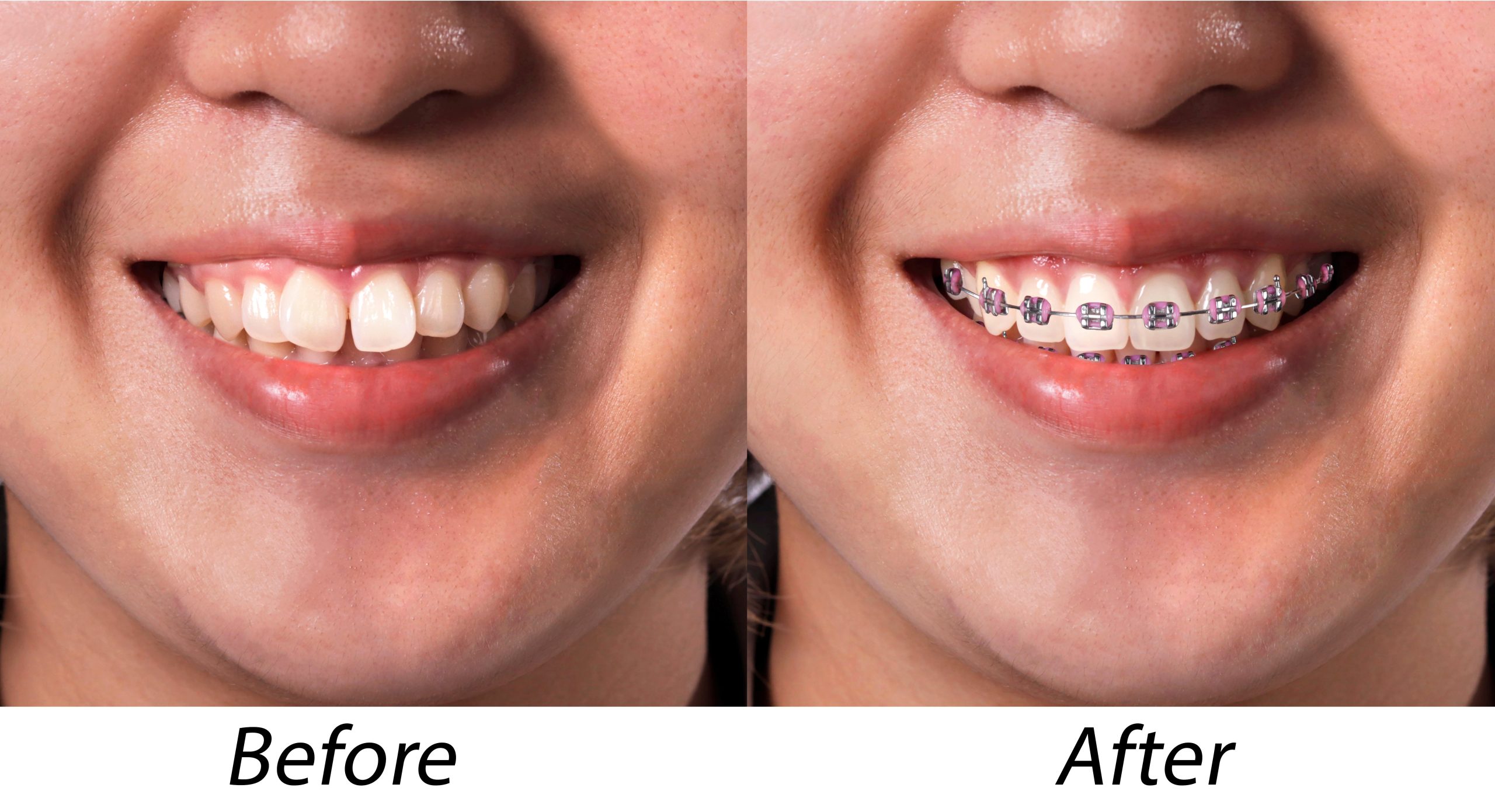
A good example was a patient who felt certain that treatment was finished because the original crowding had disappeared and the front teeth looked straight. When we examined the bite more closely, however, we found that the back teeth were not yet contacting as planned and one side was settling differently from the other. We spent a little more time refining that relationship before removing the braces, not because treatment had stalled, but because those final braces adjustments were necessary to create a more balanced and stable result.
What Actually Happens When The Braces Come Off?
Removal day tends to be much less dramatic than patients imagine. We carefully release the brackets from the teeth and remove the remaining orthodontic material from the enamel. Patients may feel pressure during parts of the process, but removing braces is generally not described as painful. What tends to generate the strongest reaction is simply how unfamiliar the teeth feel afterward.
The first instinct is often to run your tongue across them repeatedly. Without brackets and wires, the surface can feel unusually smooth and the teeth may even seem larger because you have become accustomed to feeling orthodontic hardware around them. Your bite can also feel different initially. You have spent months experiencing your teeth through braces, so direct tooth-to-tooth contact may suddenly seem much more noticeable even when everything is exactly where we planned it to be.
This is also the moment when patients finally see their smile without anything covering the teeth. For someone who started with significant crowding or spacing, the difference can be striking. For another patient whose treatment focused heavily on correcting the bite, the visual change may be more subtle, while the functional improvement is much greater. Both are successful outcomes, which is another reason we evaluate the finished treatment based on more than the before-and-after photograph.
The First Days Without Braces
The period immediately after removal has its own small adjustment curve. Your lips and cheeks no longer have brackets against them, chewing feels different, and foods you avoided during treatment are suddenly available again. There is usually no reason to turn the first meal into a test of every crunchy food you missed, however. If the teeth or gums feel sensitive after removal, starting with comfortable foods and returning to your usual diet naturally can make the transition more pleasant.
There are a few other things patients commonly experience during this stage:
- Your teeth may feel unusually smooth or even slightly strange. This sensation is especially noticeable during the first few days because your tongue has adapted to brackets being present for such a long time.
- Your bite may attract more of your attention. Without braces between the teeth and cheeks, patients often become much more aware of where individual teeth make contact. Give yourself time to become accustomed to the new sensation, and tell us if something continues to feel unusual.
- The gums may look different from what you expected. If there has been inflammation around the brackets, the gumline may initially affect how the finished smile looks. Good oral hygiene becomes particularly important as the tissues settle after treatment.
- Cleaning suddenly becomes much easier. Brushing and flossing without wires can feel almost surprisingly simple. This is a good moment to establish the hygiene routine you want to maintain long after orthodontic treatment is finished.
- You may keep expecting to feel your braces. After living with them every day, touching the teeth with your tongue or instinctively thinking about food restrictions can continue for a while. These habits generally disappear as the new normal takes over.
Removal day is therefore less of an abrupt ending than patients sometimes expect. Your orthodontic appliances are gone, but your mouth still needs a little time to adjust to the result.
Why Your Retainer Becomes Part Of The Story Immediately
One of the biggest misconceptions about getting braces off is that the teeth are now permanently fixed in their new positions. The tissues and bone surrounding the teeth need time to adapt after orthodontic movement, and teeth also remain susceptible to natural movement throughout life. This is why retention is planned as part of treatment rather than treated as an optional extra afterward.
We will explain which type of retainer is appropriate and how it should be worn in your particular case. Instructions can vary, so following the schedule you receive matters more than copying what a friend did after their braces. A sibling who finished treatment several years ago, for example, may remember wearing a retainer differently, but that does not mean the same schedule applies to you.
This is also a stage where seemingly harmless habits can create problems. A removable retainer placed in a napkin during lunch can easily end up in the garbage, while one left loose in a backpack can become damaged. Using its case every time it comes out of your mouth sounds like a tiny habit, but it prevents one of the most avoidable post-treatment headaches we see. If a retainer is lost, damaged, or suddenly stops fitting properly, contacting us promptly is much better than waiting to see whether the situation resolves on its own.
Your Next Chapter With Braces In Vancouver
Getting your braces removed is a milestone worth looking forward to, but you do not need to arrive at that appointment knowing exactly what comes afterward. Ask us about the details that matter to you, whether that is your retainer schedule, a sensation in your bite, your first post-treatment cleaning, or something you have been waiting months to eat again. Those practical questions are part of finishing treatment well.
If you are looking for braces in Vancouver or are ready to discuss the final stages of your current treatment, contact PacificWest Dental Group to book an appointment. Or, if you prefer, give us a call for the Vancouver office at 604-558-0993. We can assess where you are in the process and give you clear, case-specific guidance about what comes next.

Hello! I’m Dr. Kevin Lee, a certified orthodontic specialist at PacificWest Dental Group, proudly serving the vibrant communities of Vancouver and Surrey. My journey into orthodontics began back in high school. As a teenager wearing braces, I became fascinated by the intricate blend of art, engineering, and biology that defines this field. This early experience ignited a passion that has guided me throughout my career.
I pursued my academic journey at the University of British Columbia (UBC), where I earned a Bachelor of Science in Biochemistry in 2006, followed by a Doctor of Dental Medicine in 2011. After a year-long residency at Montefiore Medical Center in New York, I returned to UBC to complete a combined Master of Science in Craniofacial Biology and a Diploma in Orthodontics in 2015. That same year, I achieved certification from both the Royal College of Dentists of Canada and the American Board of Orthodontics.
With over a decade of clinical experience, I remain deeply committed to staying at the forefront of orthodontic advancements. At PacificWest Dental Group, we prioritize personalized treatment plans tailored to each patient’s unique needs, ensuring comfort and care every step of the way. Our goal is to help you achieve the smile you’ve always dreamed of in a welcoming and supportive environment.
Outside the clinic, I enjoy engaging with our community and staying active. Whether it’s through local events or outdoor activities, I believe in building strong relationships both inside and outside the office. I look forward to meeting you and working together to create a beautiful, confident smile.
Services we provide:
-Invisalign
-Braces
-Lingual Braces
-Digital treatment planning
-TMJ and headpain treatment
-Laser Therapy
-Sleep Apnea Oral Appliance
-Dysport Cosmetic Injectables